
Our appetite for artists’ routines is endless.
We want to know what time writers wake up and how long they work (in ecstatic bursts like Jack Kerouac or a steady 8 hours like phenomenally productive Joyce Carol Oates?).
We want to know where they work (in a hotel like Maya Angelou or in a small hut like Roald Dahl?)
Do writers keep strict word counts and steadfast schedules (should we aim to write a brief 500 words a day like Graham Greene or a 1,000 words like Stephen King who famously writes every day no matter what?).
We want to know writers’ brainstorming methods (mind mapping or rapid ideation?), their approaches to outlining (rigid Roman numerals or more free-flowing bullets?), their preferred tools for taking notes (practical but unromantic phones or more literary leather Moleskin notebooks?)
If we just use the exact model and type of pen as Virginia Woolf—we think—we’ll be able to write To the Lighthouse.
But copying a famous writer’s routine or buying a certain fountain pen won’t sprinkle our pages with magical fairy dust. There’s no one-size-fits-all regimen that will guarantee our book will top bestseller charts.
Still, there’s something to be learned from the study of writers.
Their lives might not offer a simple formula (write 3 hours a day every day + drink black coffee first thing in the morning = rave reviews in The New York Times) but they can teach us invaluable lessons about the writing craft and the creative life. Take Susan Orlean.
In her exuberant memoir Joyride, Orlean covers her illustrious career as a writer for Vogue, The Village Voice, Rolling Stone and—most famously—the New Yorker. Joyride perfectly captures the spirit of Orlean’s career: for her, writing is a joy-filled jaunt undertaken purely for pleasure. As a writer, she’s a professional explorer: she takes other peoples’ lives for a spin, exploring obscure subjects and little known subcultures.
Here are 5 lessons I learned from her exhilarating memoir:
1. follow your weirdest, most wondrous curiosities
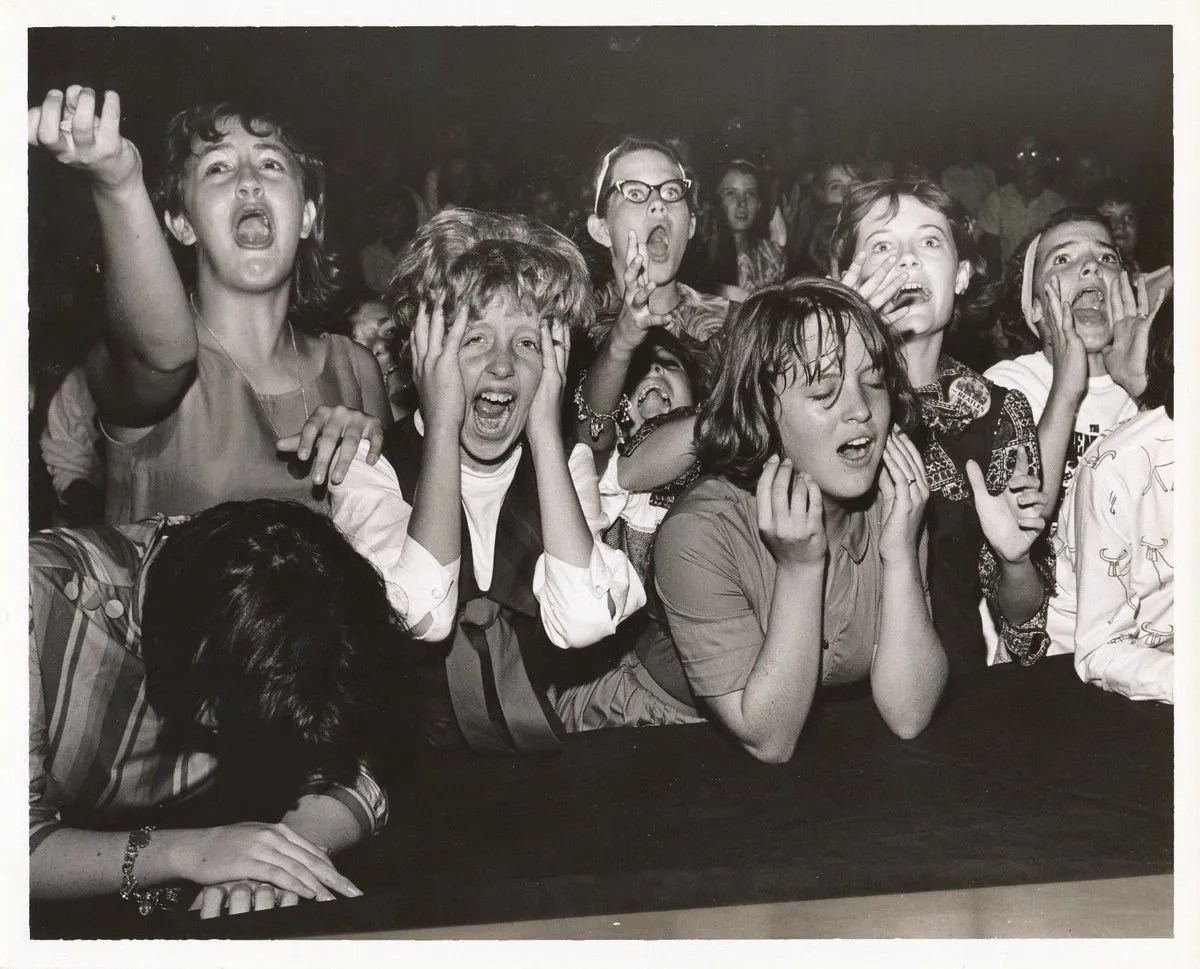
Orlean has made a career of writing about overlooked people and overlooked things: 10 year old boys, Hawaiian surfer girls, a beloved Hollywood dog, an eccentric orchid thief, a female bullfighter, a New Jersey woman who owns 27 tigers, how everyday Americans occupy themselves on the last night of the week.
Orlean doesn’t cover obvious angles or “important” issues: war or politics or what’s trendy or timely. She hunts for “who knew?” and “hiding in plain sight” stories. She follows her own curiosity.
On the surface, such niche topics may seem uninteresting (after all, who cares what people do with their Saturday evenings?), but Orlean has a way of making the mundane utterly engrossing.
After building an impressive writing career in the 1980s, Orlean decided it was time to write a book, though she didn’t have an all-consuming idea or fervid fascination with anything.
But what to write?
She settled on Ironman triathlons: she had already covered the novel subculture in a popular piece for the Boston Globe. Marathons were trending and the idea seemed marketable.
Determined, she wrote a proposal. But publisher after publisher passed.
When she did finally land a book deal with Simon & Schuster, editor Joni Evans asked, “Is this the book you really want to write?”
Somehow she could intuit that Orlean’s heart wasn’t really in it.
“No,” Orlean blurted out, “I want to do a book about Saturday night in America. I want to travel around the country and spend Saturday night in all kinds of different places.”
“Great, let’s call your agent.”
Saturday Night was born.
Was Ms. Evans persuaded by Orlean’s premise or her passion?
It’s hard to know for sure but I’d bet she was enticed by her energy, her absolute enthusiasm for the topic. The best writing begins with a genuine desire to know more—not a desire to package something marketable for the masses.
What makes Orlean’s writing so irresistible is her zestful curiosity. When you first read her work, you might care less about orchid poaching or advanced origami (in fact, such topics might seem irredeemably boring) but her enthusiasm is spellbinding.
Orlean has conviction in her own ideas: she doesn’t ask will my audience care? She’s confident her reader will care because she cares.
So chase your curiosities, no matter how obscure, how quirky, how random, how seemingly strange or ostensibly ordinary. Follow what you think is fascinating.
2. break up seemingly insurmountable tasks into manageable chunks

Is there anything as intimidating as creating something from nothing?
As someone who’s written 9 books and hundreds of articles as a New Yorker staff writer, Orlean knows the terror of confronting the blank page. Glaring and white, the yet-to-be-filled page beckons with paralyzing possibility.
Writing a book (which can often stretch beyond 100,000 words) can be daunting. The whole process—brainstorming, outlining, reporting, researching, drafting, editing—can take years, sometimes decades.
When Orlean began The Orchid Thief, the prospect of writing an entire book was overwhelming. How was she going to write 300 pages about orchids? Each day felt like a failure because she couldn’t magically finish the book in a single sitting.
“What’s the point of writing a page or two, a measly nothing, when I had an entire book to write?” she wondered.
Her New Yorker editor Chip McGrath suggested she give herself a daily word count quota:
“Think of yourself as a widget factory and sit down every day and make your daily quota of widgets.”
Orlean decided the daily quota at The Orchid Thief factory was 800 words. The idea of her as an assembly line producing pages was distinctly unromantic but it worked. 800 words was ambitious enough to feel like an accomplishment, achievable enough to actually do. Reaching a daily goal, no matter how seemingly small, made Orlean feel like she was making real progress on the book, even if it would be a while before she could buy it at Barnes & Noble.
Writing a book is like running a marathon: if you think about the full distance ahead, you’ll give up. So don’t fixate on the finish line—focus on the next checkpoint. Creating something from nothing is more manageable if you take it—as Anne Lamott puts it—“bird by bird,” one step at a time.
3. use notecards to organize your research

I didn’t start writing my senior thesis for my film noir seminar until two months before it was due.
Panicked, I spent countless caffeine-fueled hours in Moffitt Library poring over Adornoian critical theory and 1940s Variety issues. After a few weeks of research, I had a staggering mountain of material.
Now what?
I had hundreds of fascinating facts and thought-provoking trivia but no idea how all the puzzle pieces fit together. The sheer volume of material sent me into a spiral.
How could I possibly organize this into a coherent 20 page paper?
Should I discuss the director first or situate this particular film in a broader historical context?
Should I walk through the film chronologically or sort my material by theme and subtopic?
Orlean encountered this same sense of overwhelm when writing The Orchid Thief. After interviewing dozens of people and reading hundreds of books at the library, Orlean felt like she was drowning. Then she remembered John McPhee’s method for reporting: five-by-seven index cards.
Why notecards?
According to Orlean, “The amount of material you can fit on a card is somehow exactly the right amount—they are about the size of a fully-formed idea.”
Unlike a traditional 8 1/2 x 11 page, an index card is compact. 1 card = 1 thought. The card’s bite-sized dimensions help you break your research into digestible chunks.
And unlike the disembodied cyberspace of a Google doc, index cards are physical and portable: you can endlessly arrange and rearrange them until you visualize a structure.
Once Orlean compressed her exhaustive research into 700 notecards, she gathered like topics together: orchid history, Florida history, Fakahatchee history, Laroche’s story. With the cards spread out on the table, she could identify patterns and see her story’s final form.
4. listen to where your story wants to go

When Orlean first began reporting for The Library Book, she imagined it as a classic whodunit. The story would revolve around the central question: who set the Los Angeles library on fire in 1986?
The book held a tantalizing possibility that Orlean could solve a decades old mystery.
In the beginning, she imagined Harry Peak, the chief suspect of the arson investigation, was the most likely culprit and, therefore, the central character of her narrative.
But reporting made her see the story in a new way.
She discovered Peak, the man she thought would be her protagonist, died of HIV/AIDS in 1993. There wasn’t enough evidence to conclusively identify him as the arsonist and he wasn’t alive to fully reconstruct his story or defend his claims.
Her carefully laid plans for The Library Book were burning away.
But rather than force her story to fit her original conception, she followed where it wanted to go. What began as a conventional true crime narrative about a single library fire evolved into a greater exploration of books, memory, public spaces and the preservation of the public record:
“Now I felt like I knew what The Library Book was about at its core: It was about the quintessence of memory. It was about Harry Peak, who desperately wanted to be remembered for something, even if it was something as terrible as burning a library. It was about how, throughout history, libraries have contained our shared intelligence, which was why we embraced them so dearly and why they’re been targets for tyranny, because destroying them was a statement of dominance, a whip hand on society to exert control.”
Ultimately, reporting reveals the story. You can’t let your narrow notion of what the story is supposed to be about keep you from seeing where the story wants to take you. Being a writer means being willing to abandon your planned path and get lost in untrodden woods. As Orlean writes, “I always remind myself that, in nonfiction, the story is in charge. Whatever you expect it will be, wherever you thought it would take you, doesn’t matter at all. The story goes where it goes.”
5. refuse to bring your story to a neat, tidy resolution
Step #1: Restate your thesis
Step #2: Recount your main points
In school, conclusions are often exercises in dreary obligation, things we have to do to meet our teacher’s rigid requirements. By the time I reached the final paragraph in my high school English class, I was so exhausted and uninspired that I simply regurgitated what I’d already said (the sleep-deprived student’s conclusion = copy & paste your introduction + hope your teacher doesn’t notice). After all, wasn’t the purpose of a conclusion to simply summarize my central points and bring the story to a satisfying end?
According to too-serious English teachers, a conclusion must a) restate your central argument (as if the reader is so dense they’ve forgotten over the course of a brief 5 pages) and b) answer the immortal “so what?” (why does what you’ve said matter and have significance outside 10th grade English Composition?).
The obligation to construct meaning belongs to the writer—not the reader.
But Orlean offers a different perspective.
Instead of culminating in a dramatic flourish of finality, the best endings linger like an impossible-to-get-out-of-your-head melody. The song of the story should echo in the reader’s mind—long after they’ve turned the last page.
Recounting yet another lesson from her editor McGrath, Orlean writes:
“My first significant editing experience at The New Yorker has to do with the ending of a piece. When Chip chopped off that wagging tail of a conclusion I had written at the end of my story about Benetton, I was dismayed. I thought it read like someone had stopped the action midmoment, the reading equivalent of inhaling sharply and holding it, holding it—and not letting it out.
After my initial shock at this excision, I read the piece again, and this time the abruptness felt right. Had I gotten used to the lingering note of the unfinished end? The way it left the reader falling forward, to complete the piece in his or her own head? I began to unlearn my habit of writing those summary upsurges, rehashing what I’d already written and then, effortfully, trying to round out the story, complete it, give it ballast, make it matter. But does a story end because the journalist’s eye has drifted from it? Can any of us set the seal on a story, ever? Should I tell you what a story meant, or is the point that you read it and then it’s up to you to determine what it means? I’ve come to understand that no story is ever over, and it’s the reader’s duty and privilege, not mine, to take stock of the story and give it weight.”


Be First to Comment